
About
My Why
This practice has been a labor of love for community care. I deeply believe that representation matters, especially when it comes to the nature of a therapeutic relationship. Let’s be honest, the mental health system has done historical and biopsychosocial harm to people of marginalized identities and communities, causing people to feel less like people. Because of this, it isn’t uncommon to feel worried about seeking mental health services for yourself and/or loved ones.
The stigmatization of mental health did not just happen and therefore my goal is to see a person as whole in context of intersectionality of identities, family history, cultural history, biology, spirituality, relationally among loved ones and peers, and lived experience- not pathology.
I know, first-hand, how it feels to be not fully seen or heard for who I am in a therapy room.
As a result, my practice is grounded in decolonization and liberation.
You are all welcome here.
Clinical
Experience
-
BA Sociology (San Francisco State University)
24 ECE (early childhood education) unitsMA Counseling Psychology, concentration: Marriage Family Therapy (University of San Francisco)
-
Traineeship: Adolescent inpatient @ McAuley Institute, St. Mary’s Medical Center
Internship: Policy & Communications Intern @ Center of Juvenile and Criminal Justice (CJCJ)
Associateship: Edgewood’s Crisis Stabilization Unit (Crisis Clinician)
Associateship: Blue Humming Therapy (Clinician & Community Consultant)
Current tele-mental health service: Allminds (Clinician)
-
Dialectical Behavior Therapy Certification (C-DBT) from Evergreen Certifications
Somatic EMDR Certificate from The Embody Lab
Integrative Parts WorkCertificate
(All 3 levels complete)
from The Embody LabMaternal Mental Health, Basic Training Certificate from Postpartum Support International (PSI)
Perinatal Loss: Clinical and Supportive Care, Advanced Training Certificate from Postpartum Support International (PSI)
Grief Educator Certificate from David Kessler
Community Mental Health Certificate (City College San Francisco)
-
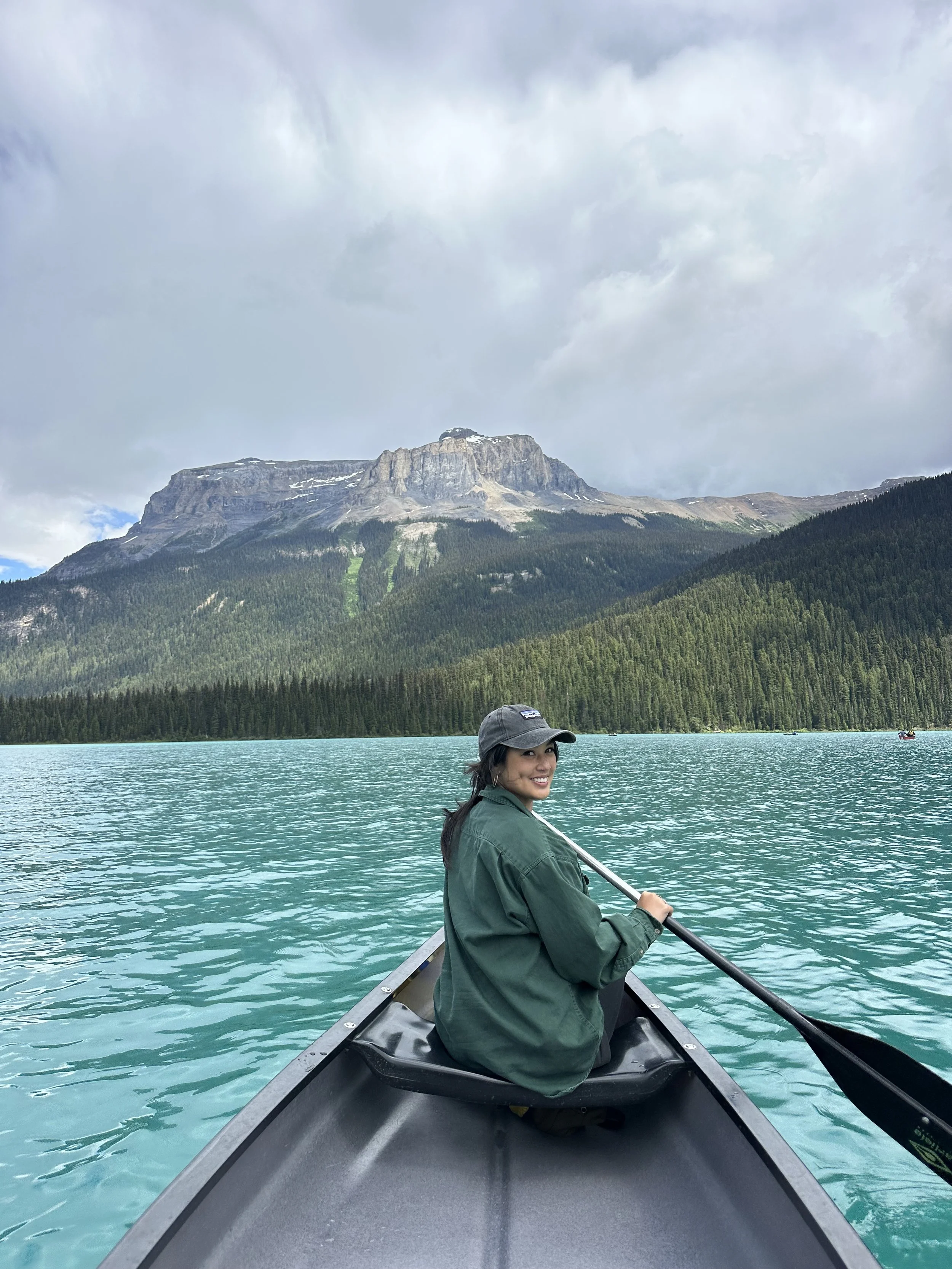
Who I am outside of therapy
I oscillate between being a cozy couch potato (book-worming, crocheting, crafting, playing games) and an adventurer through travel and outdoor activities- especially any that include being in/by water, followed by a good hole-in-the-wall eatery.
My perfect day looks like…
1. not having to put away laundry, meal-prep, or other chores
2. picnicking in the sunshine with a good book, probably overpriced but delicious coffee, a pastry, and my kitties (yes, Tala and Joopy are picnickers too)
3. watching the sunset after a good run along the beach
(I’m a firm believer that an Ocean Sunset has answers to so many questions I can’t find words to ask)
My Approach
Therapy with me is based in a model of collaborative care and empowerment.
While I am gentle, I am also an active participant in sessions to support you through processing experiences, untangling thoughts, creating goals, and offering psychoeducation.
These are modalities/interventions that I integrate into sessions:
-
I use an integrative approach of narrative, mindfulness, and internal family systems interventions to help you map and integrate cohesion among various parts of yourself. All parts of you are welcome.
An example of this is what folks tend to describe, “a part of me feels…and another part feels…” We work with these parts!
Additionally, I encourage clients to re-establish safety within themselves through somatic work. When it comes to my approach to trauma, we let the body lead. We can’t think our way out of trauma.
-
“Dialectics” is the experience of holding two seemingly opposing ideas, feelings, experiences simultaneously to reduce rigidity and distress. DBT is skills-based wherein I teach you mindfulness, distress tolerance, emotional regulation, and interpersonal effectiveness skills in order to better cope with your lived experiences and improve your relationships with others.
-
Cognitive Behavioral Therapy presumes that if we change the way we think, we change the way we feel, and we change the way we behave. Sometimes it’s the problem that causes us the most distress, it’s the way we think about it. If we change the way we think about it, we change our relationship.
Mindfulness Based Cognitive Therapy combines this approach with mindfulness practices to prevent overintellectualizing and essentially intellectually bypassing our feelings. In turn, this helps in mediating thoughts and feelings where one doesn’t override the other.
-
Expressive Arts: When appropriate, and if clients express interest, I offer integrated somatic and expressive arts interventions to facilitate processing. Sometimes we do not have the “right words” to convey our experiences and creative, experiential approaches are helpful in bridging this gap.
Narrative: We tell ourselves stories about ourselves and the world all the time, and sometimes we don’t realize the stories we tell ourselves don’t truly reflect our experiences. I support clients to externalize, deconstruct, and re-author these stories through clarifying language used and contextualizing the experiences. In this way, honoring a person’s story in context of their personal history, family, family history, current sociopolitical climate, spirituality, and unique intersectionality of identities is important.
Motivational Interviewing: This is a collaborative process of weighing the risks & rewards and pros & cons. Through this process, people are able to explore motivators, ambivalence, and barriers for behavior changes in order to make informed decisions.
“In our world, divide and conquer must become
define & empower.”
Audre Lorde